Hello Noir! [Part 2]
Using Barretenberg to generate and verify proofs, deploying a Solidity verifier with Foundry, and understanding the trust model.
Apr 7, 20266 min read2
![Hello Noir! [Part 2]](https://luk3.tech/hashnode/covers/hello-noir-part-2.png)
Search for a command to run...
Articles tagged with #zero-knowledge-proofs
Using Barretenberg to generate and verify proofs, deploying a Solidity verifier with Foundry, and understanding the trust model.
Setting up the environment and getting an idea what and how will be used.
![Hello Noir! [Part 1]](https://luk3.tech/hashnode/covers/hello-noir-part-1.png)
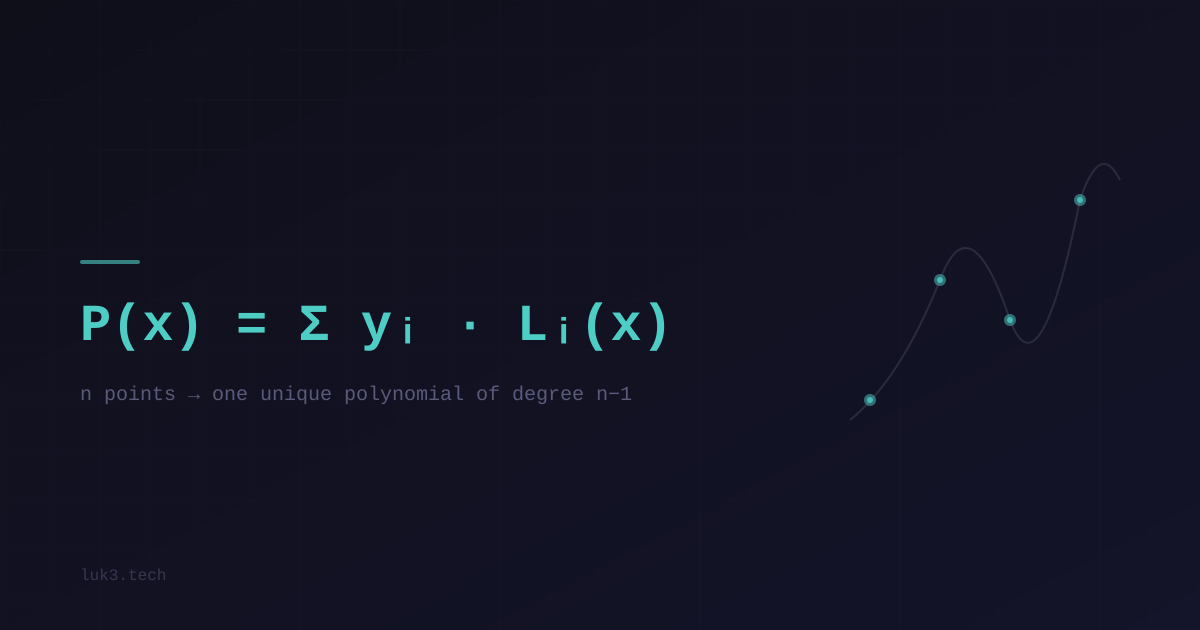
You have a list of points. Lagrange interpolation gives you the one polynomial that passes through all of them. Here's why ZK proofs care.
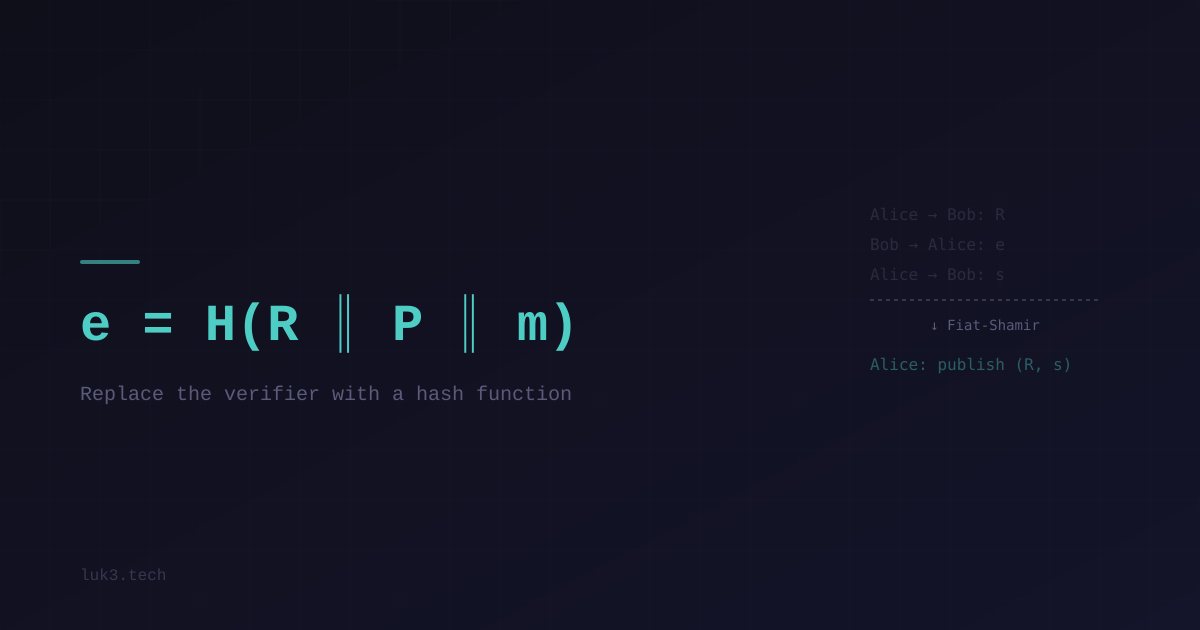
Schnorr signatures started as a back-and-forth conversation. Fiat-Shamir turned that conversation into a one-liner. Here's how a hash function replaces a trusted stranger.
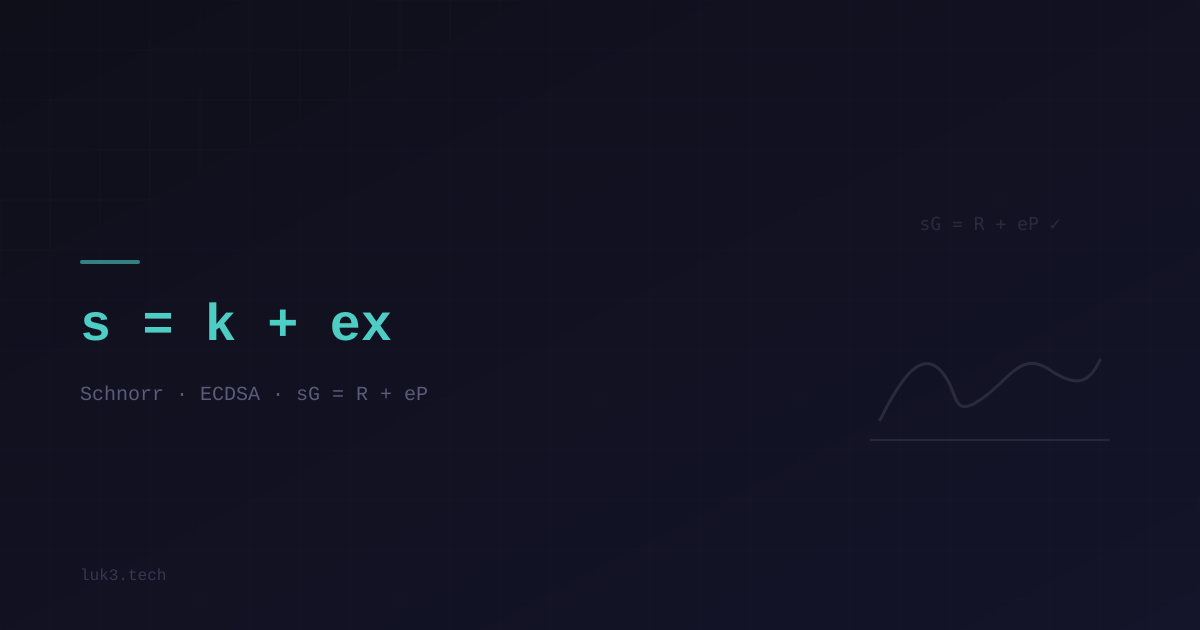
You made it through elliptic curves. Now let's see how they're actually used - signing things, proving identity, and why reusing a nonce will ruin your life.
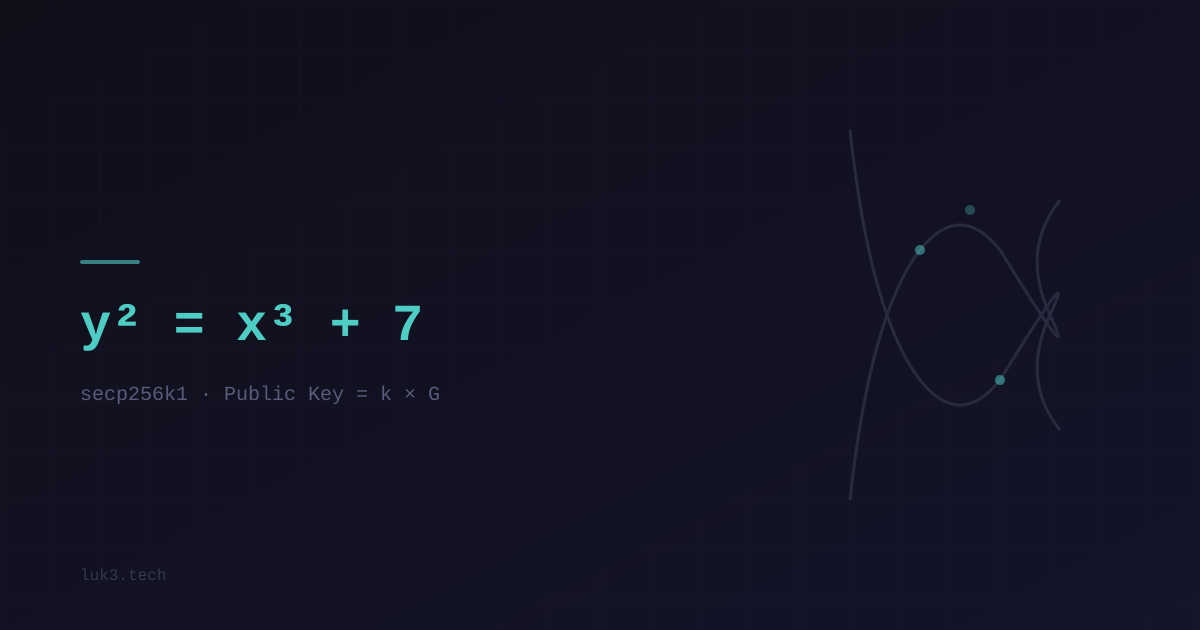
You don't need a math degree to understand elliptic curve cryptography. You just need to understand why spilled rice is more secure than a snake.